NPN vs PNP Transistor: Divider Bias Side by Side
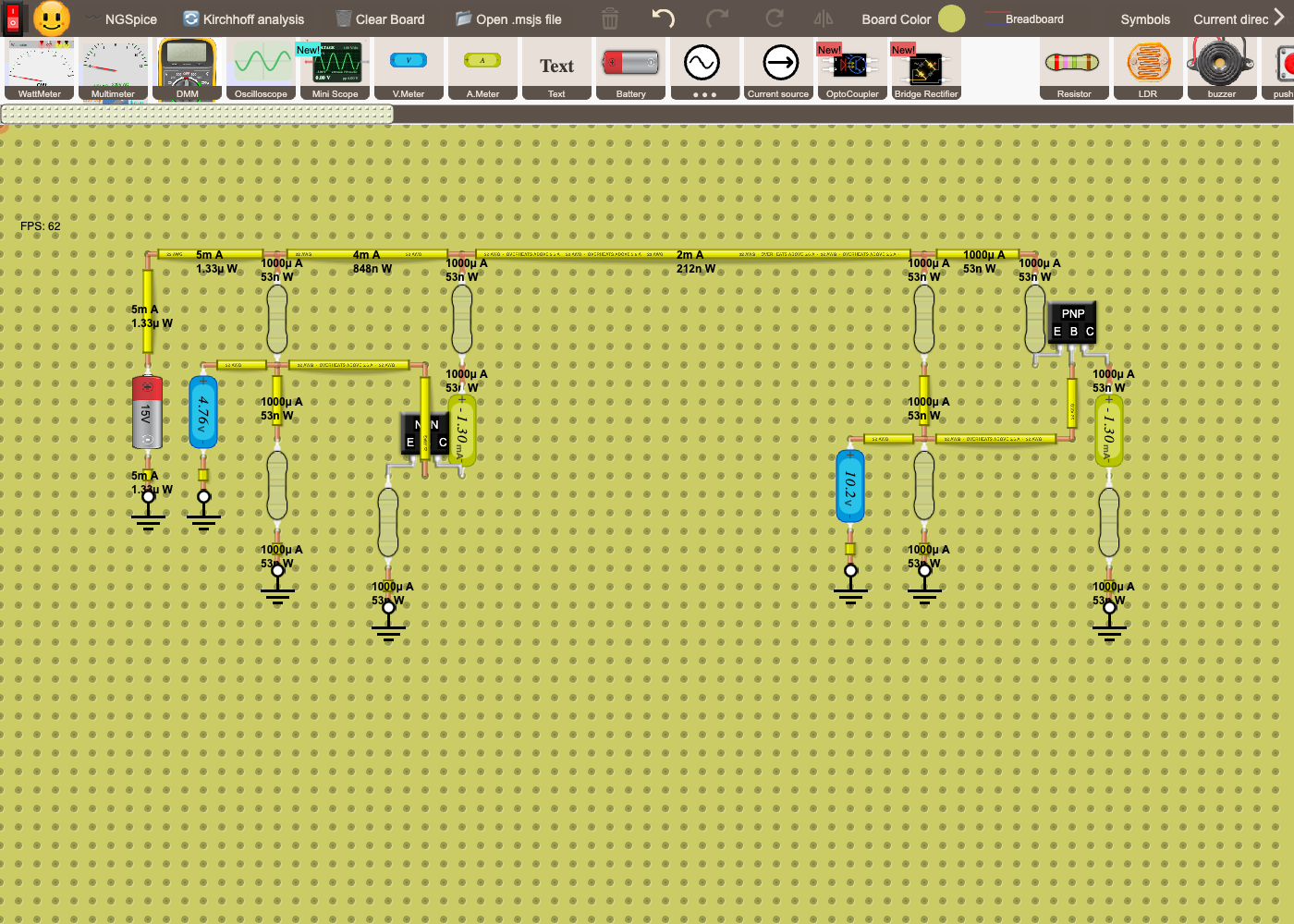
The same voltage-divider bias built with an NPN and a PNP transistor on one 15 V supply. Both collector currents read about 1.2-1.3 mA, with opposite…
Learn to use a multimeter, with circuits you can measure
Learn how a transistor switch works, with circuits you can try
Want to build your own circuit? Start a new circuit in the circuit simulator
Teaching with circuits?
Create a classroom, give your students a circuit to build, and review what they submit. Try it free with one classroom and up to 5 students.
Try the free classroom demoHow it works
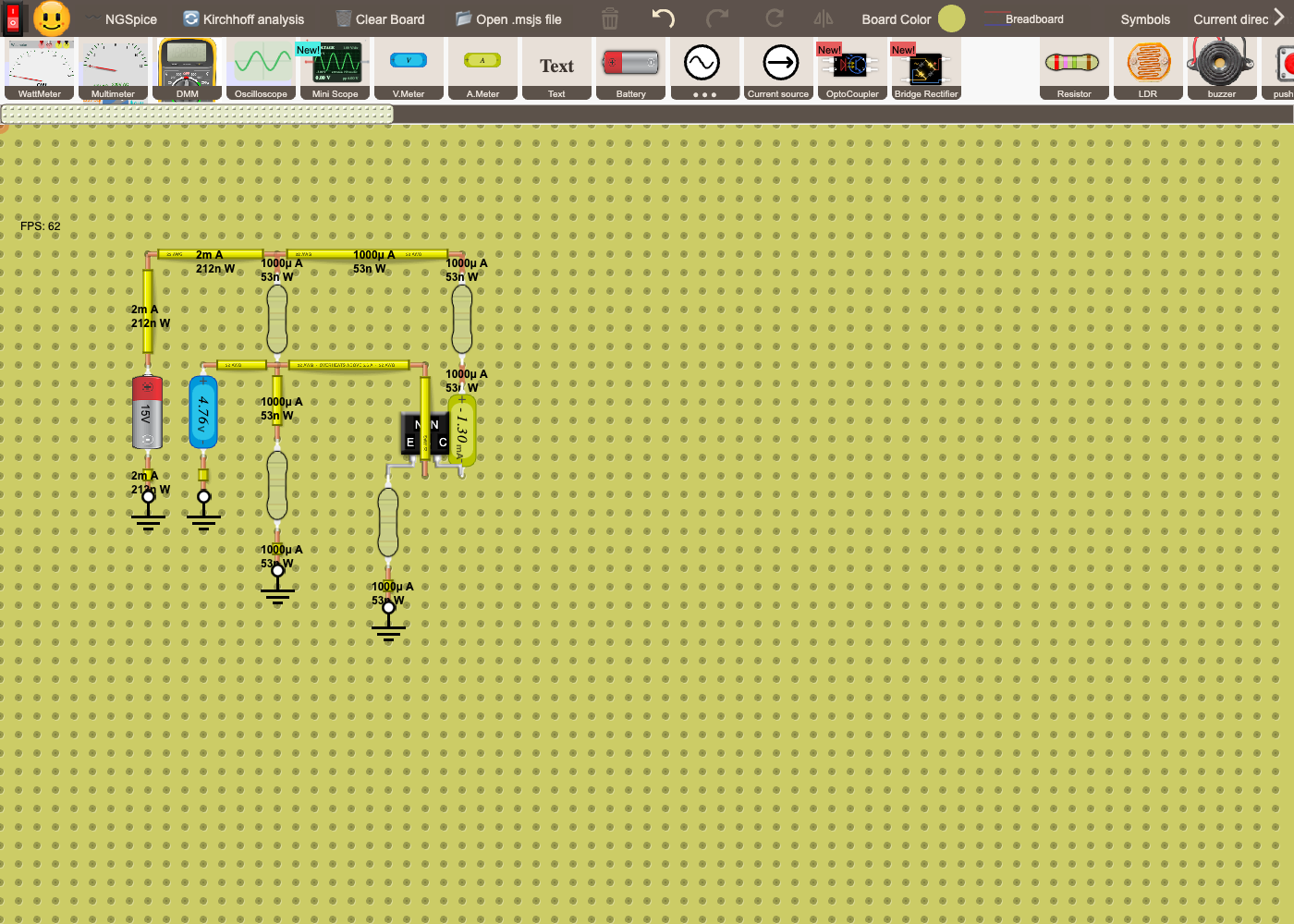
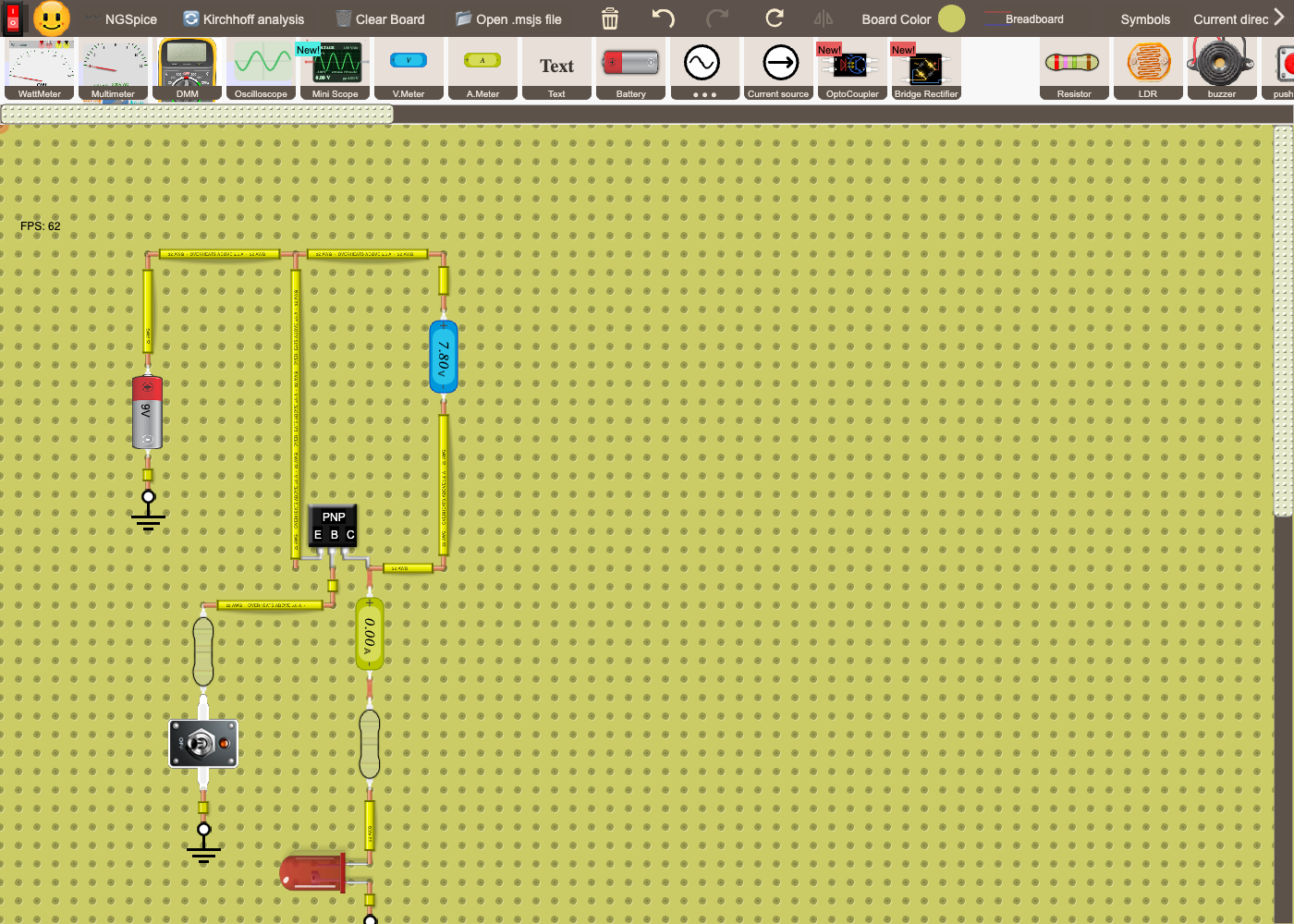
On the left, an NPN transistor with voltage-divider bias: 10 kΩ and 4.7 kΩ on the base, 3.9 kΩ on the collector, 3.3 kΩ on the emitter. On the right, its PNP mirror: the divider is flipped, the emitter resistor goes to + and the collector resistor to ground. Both share one 15 V battery and have beta set to 200.
The NPN base sits at about 4.76 V and the PNP base at about 10.2 V. Both ammeters read about 1.2-1.3 mA. The PNP collector sits at about 5 V, about 5.8 V below its emitter: the same circuit, with every voltage turned around.
What's inside
- 1× Battery
- 8× Resistor (10 kΩ, 4.7 kΩ, 3.9 kΩ, 3.3 kΩ)
- 2× Transistor
- Measured with Voltmeter/Ammeter