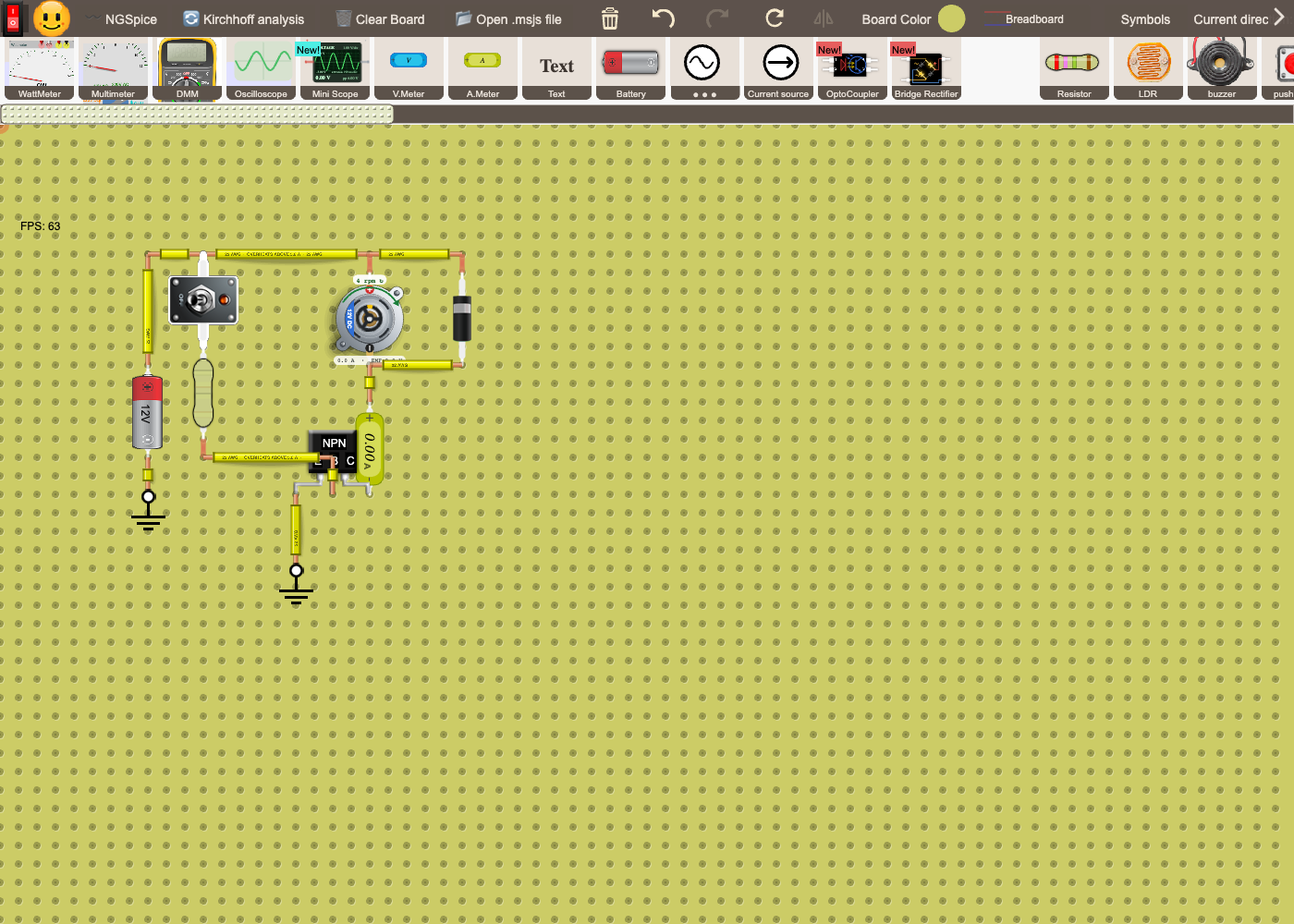
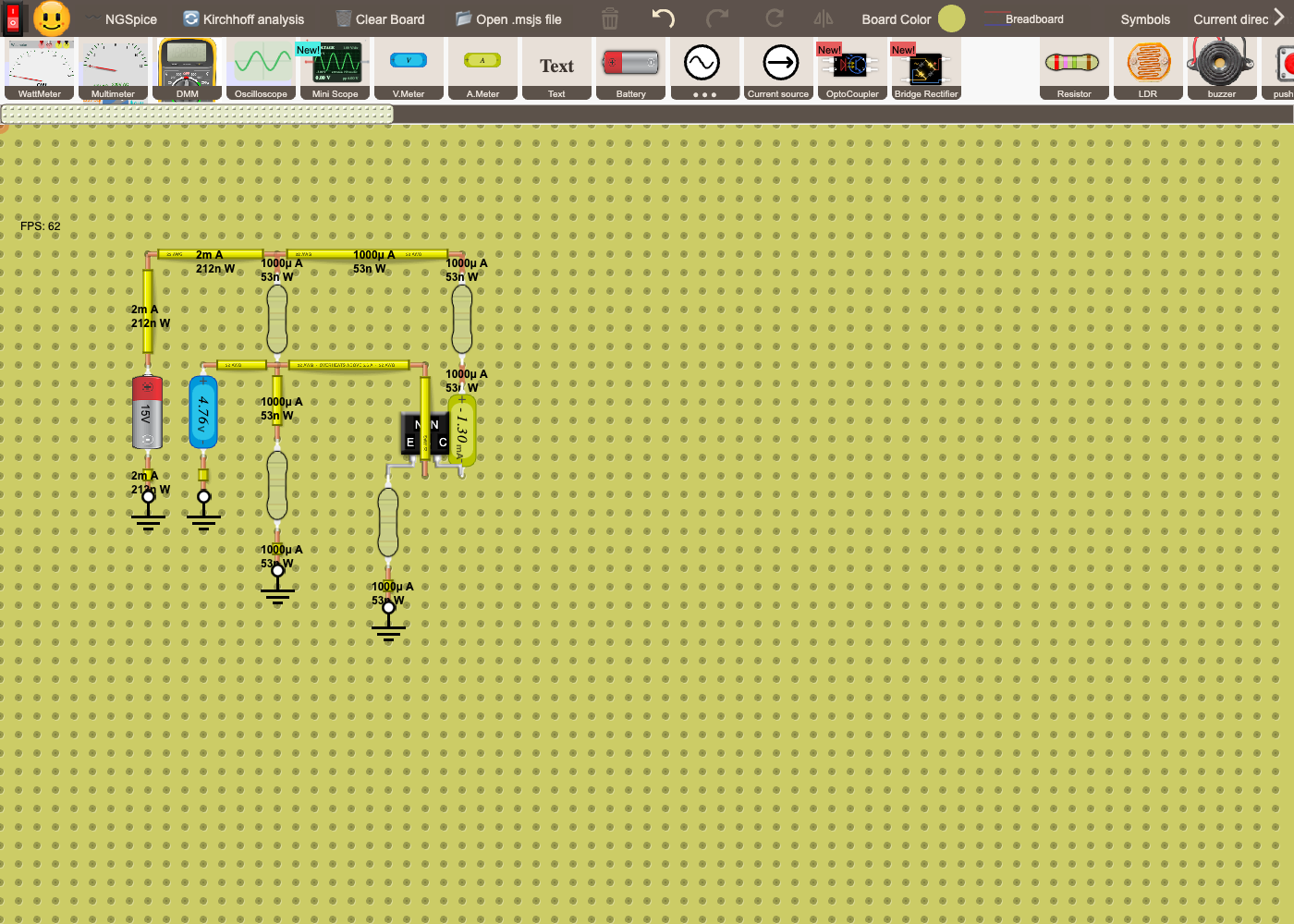
NPN Transistor Low-Side Switch with an LED
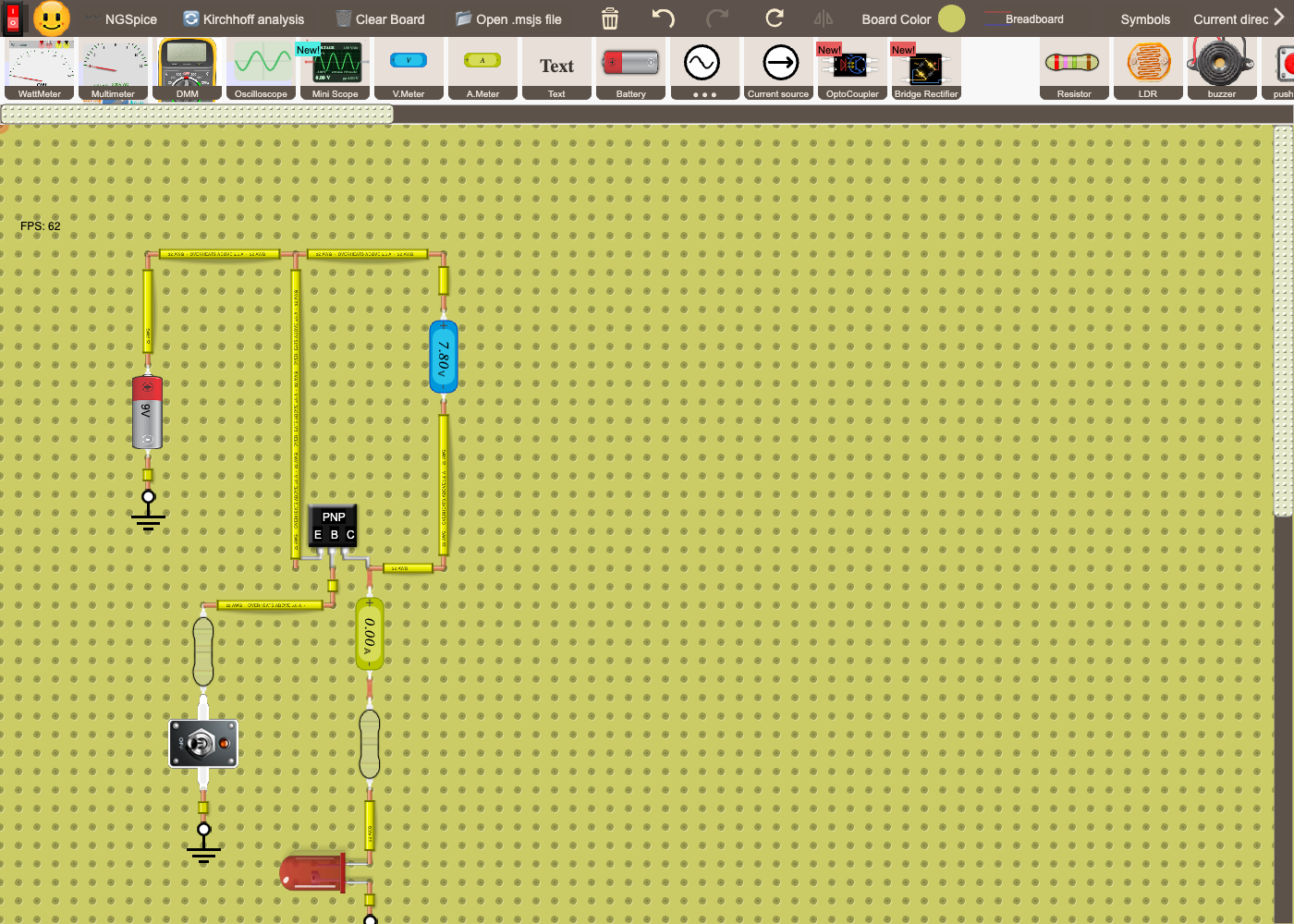
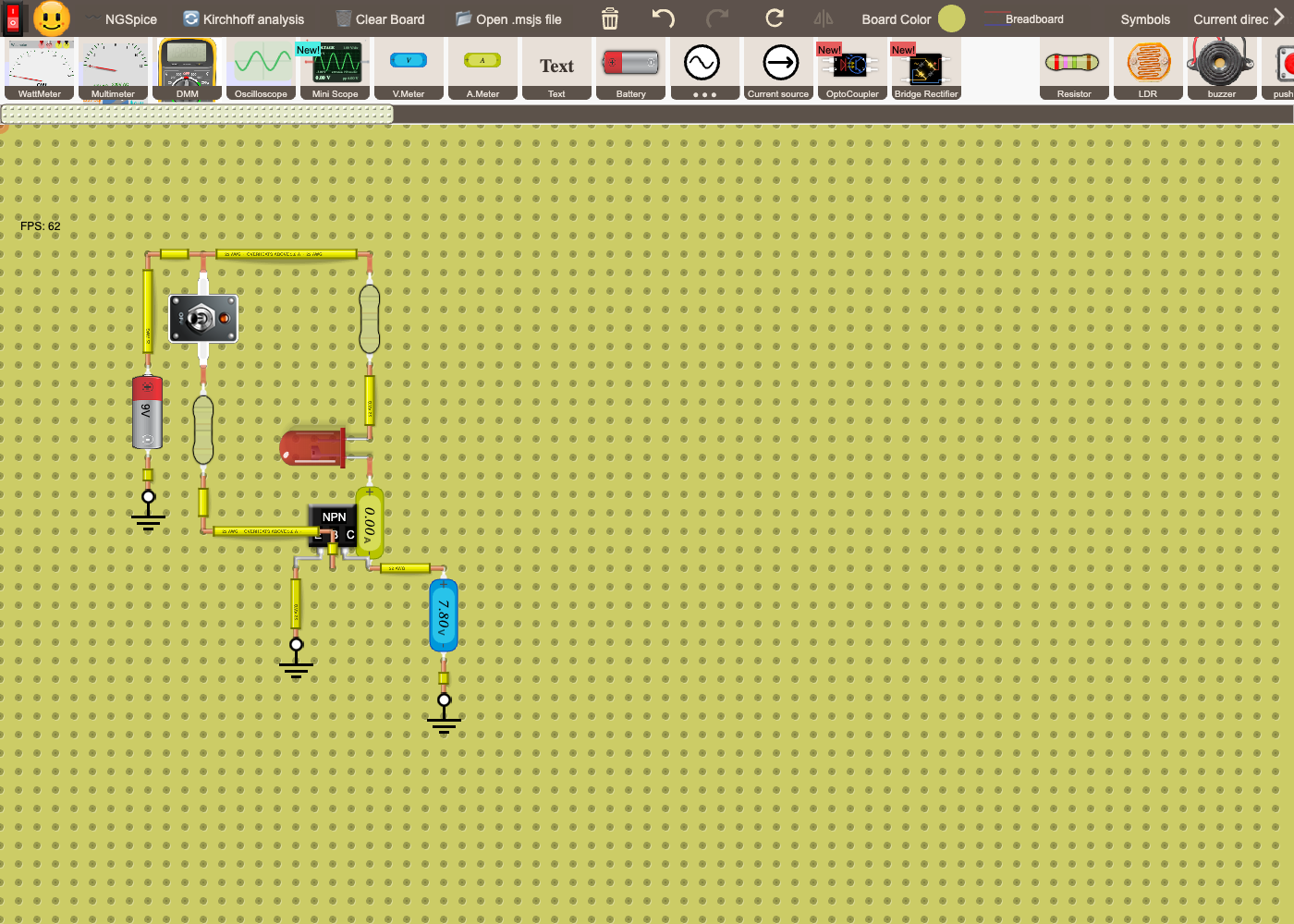
A 9 V battery lights a red LED through an NPN transistor on the low side. Flip the toggle switch on the base and the meter jumps from 0 to about 14-16 mA.
Learn to use a multimeter, with circuits you can measure
Learn how a transistor switch works, with circuits you can try
Want to build your own circuit? Start a new circuit in the circuit simulator
Teaching with circuits?
Create a classroom, give your students a circuit to build, and review what they submit. Try it free with one classroom and up to 5 students.
Try the free classroom demoHow it works
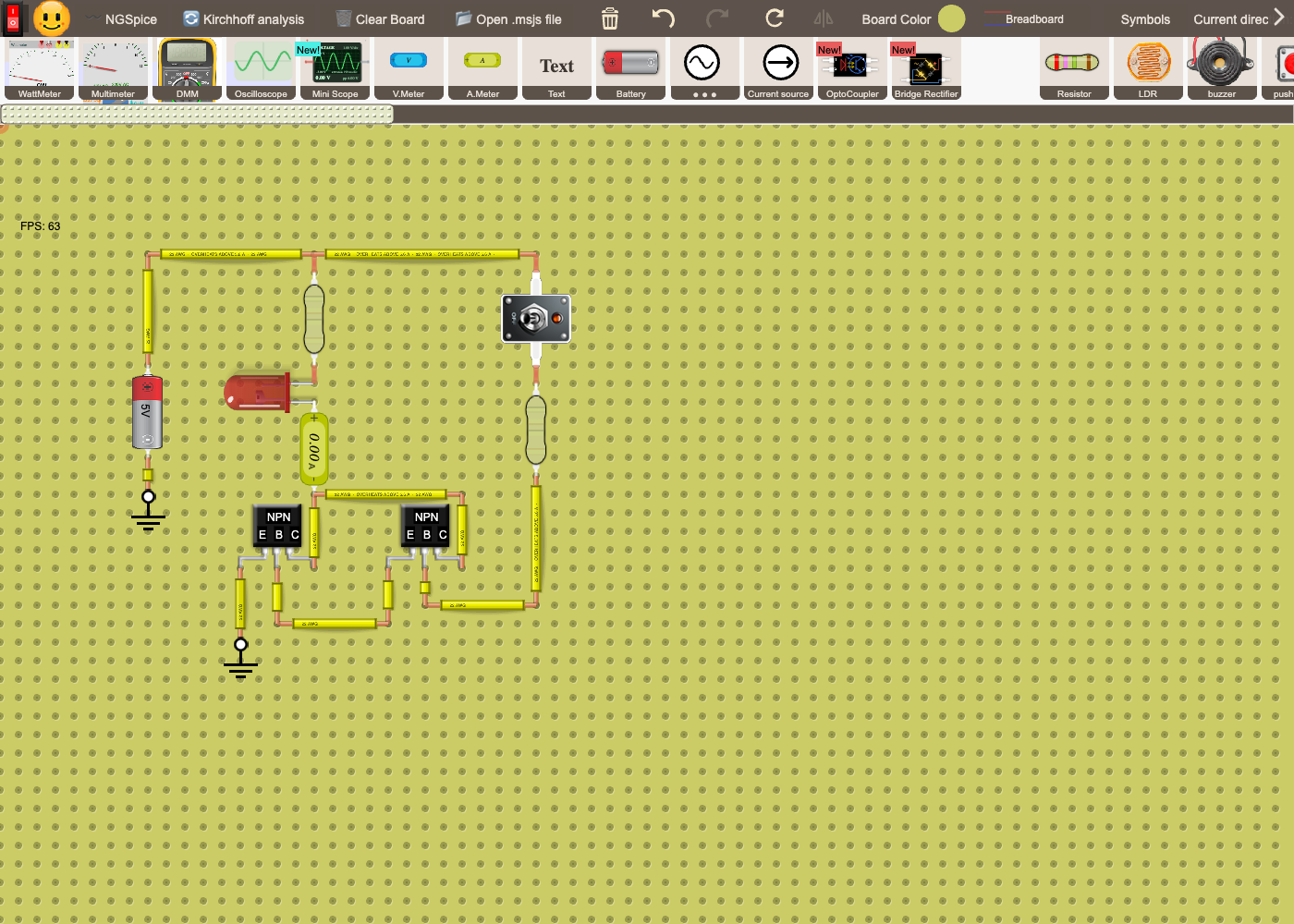
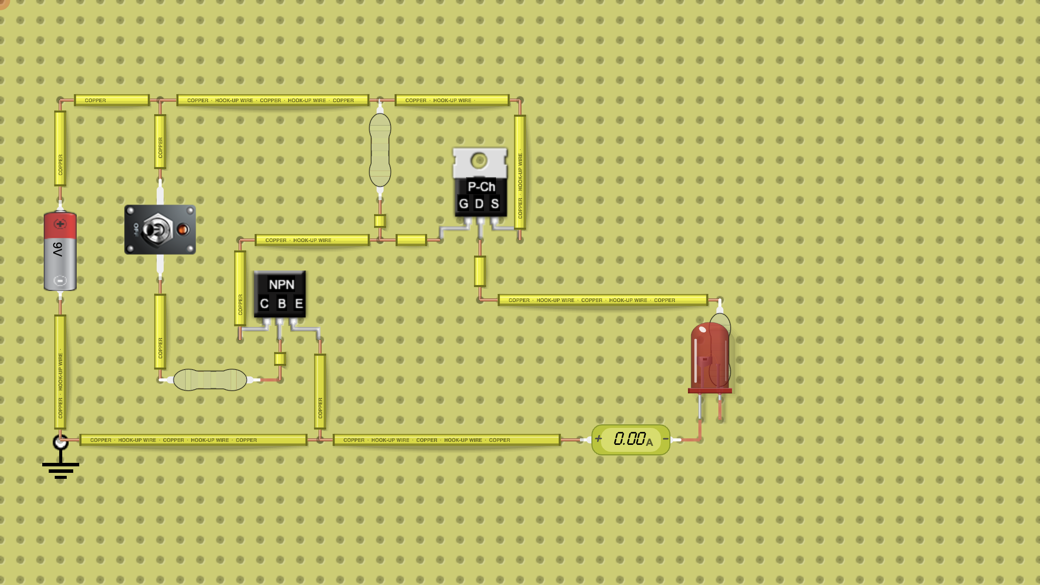
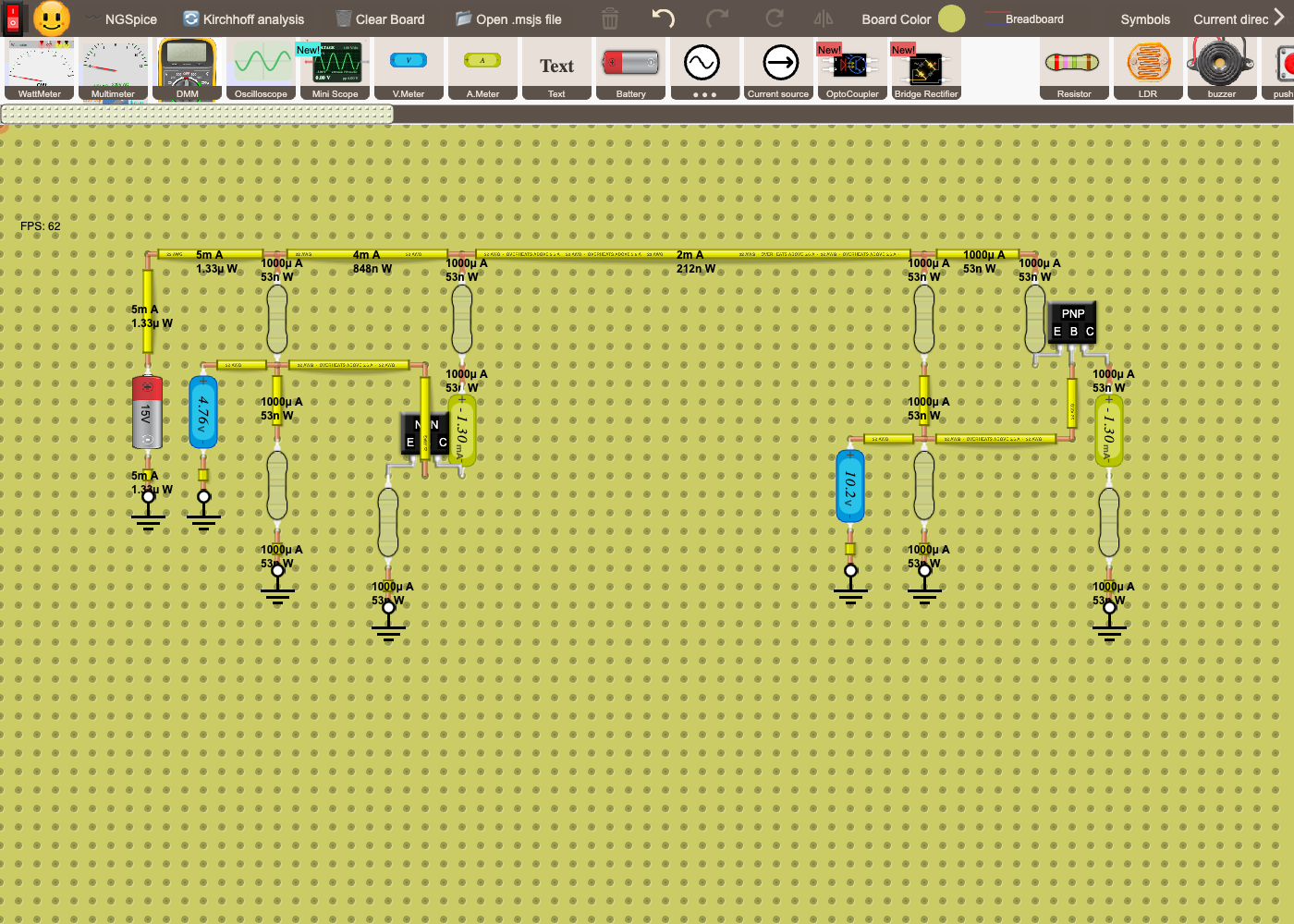
The 470 Ω resistor, the LED and the ammeter sit between the battery's + and the collector; the emitter goes to ground. The toggle switch feeds the base through 10 kΩ, and a voltmeter reads the voltage from collector to emitter. With the switch open no current reaches the base, the transistor is off and the ammeter reads 0. The voltmeter then shows about 7.8 V, not 9 V: a tiny leakage current still flows through the LED while the transistor is off, and at that tiny current the LED drops about 1.2 V of the 9 V.
Close the switch: about 0.84 mA flows into the base, far more than the LED needs, so the transistor saturates. The meter reads about 14-16 mA and less than 0.1 V is left from collector to emitter, so almost all of the battery's voltage reaches the LED.
What's inside
- 1× Battery
- 2× Resistor (470 Ω, 10 kΩ)
- 1× LED
- 1× Transistor
- 1× Switch
- Measured with Voltmeter/Ammeter